

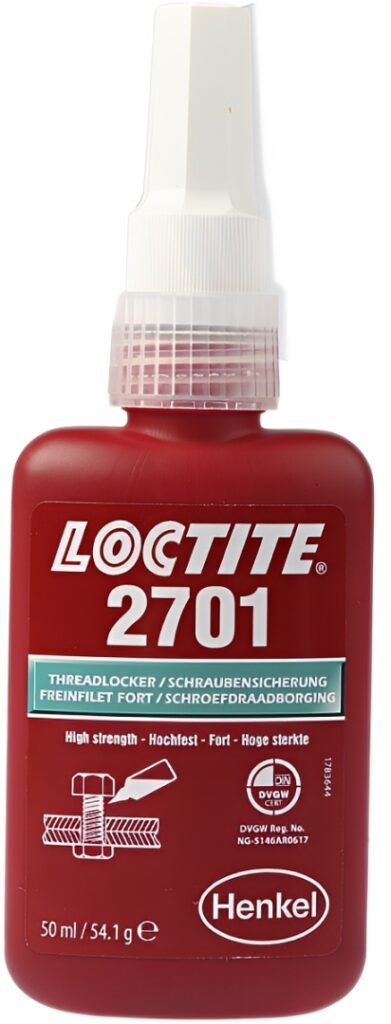
Repeatedly tightening the same loose fastener wastes maintenance time and often hides an unresolved mechanical problem. Vibration, poor joint design and inconsistent assembly can all contribute to recurring faults. Loctite Green Thread Lock may help a suitable metal joint remain secure, but lasting improvement begins with understanding why the connection loosened.
The Loctite Green Thread Lock, listed as part 234853, is the 50 ml LOCTITE 2701 high-strength anaerobic threadlocker. Henkel developed it for close-fitting metal fasteners, including applications involving less active surfaces such as chromated metal. Its low-viscosity green liquid cures between assembled threads, making it a considered option where disassembly is not routinely expected.
Why Do Some Fasteners Keep Coming Loose?
A loose bolt is a symptom, not always the underlying failure. Equipment may experience transverse vibration, changing temperatures, inadequate clamping force or movement between connected parts. If technicians simply retighten the joint, the problem can return during the next operating cycle.
Start by checking the original design and maintenance history. Look for damaged threads, incorrect fastener grades, deformation and evidence of parts moving against one another. Threadlocking can resist rotation, but it cannot replace adequate preload or repair a mechanically unsuitable connection.
What Can a Maintenance Record Reveal?
Compare dates, operating hours and fault locations. If failures occur only after a particular service operation, inconsistent tightening or unsuitable replacement hardware may be involved. If several joints loosen after equipment changes, investigate vibration and alignment before changing the adhesive grade.
A record of the fastener type, installation method and operating conditions gives future teams a more reliable starting point than a note saying only “bolt tightened”.
When Is LOCTITE 2701 a Sensible Choice?
This formulation is intended for high-strength locking and sealing of metal threaded fasteners. It is especially relevant when an assembly is expected to remain intact for long periods and repeated vibration makes unwanted rotation a concern.
However, maintenance accessibility matters. A removable cover, calibration mechanism or frequently serviced guard may require another securing method. A high-strength adhesive should never be applied automatically to every screw on a machine.
Which Materials Can Change the Result?
Henkel reports that curing behaviour varies between metals, including steel, stainless steel and brass, as well as with temperature and the gap between threads. The product tolerates slight industrial oil contamination, yet proper cleaning remains the preferred preparation practice.
Avoid assuming that the product behaves the same on plastic or mixed-material assemblies. Follow the manufacturer’s compatibility instructions, particularly for parts susceptible to stress cracking.
How Can Better Fastener Selection Prevent Rework?
Choose the correct thread, material grade and engagement length before thinking about adhesive. For example, Hex Bolts are available in different dimensions and materials, and their suitability depends on the assembly’s load and environment. An unsuitable bolt cannot become acceptable merely because its threads have been bonded.
Socket Screws may offer access advantages in confined equipment, while Machine Screws are common in lighter assemblies. Locking Nuts provide another securing approach, while Spring Washers may be specified for particular joint designs. Neither should be treated as a universal substitute for an engineered locking method. These are engineering choices rather than interchangeable remedies.
What Should Technicians Check Before Reassembly?
- Confirm that the selected fastener matches the approved drawing.
- Inspect mating threads for corrosion, distortion or stripping.
- Remove contamination using the specified cleaning method.
- Identify surfaces, seals or materials that need protection.
- Establish the approved tightening and curing procedure.
- Document any authorised substitutions or design changes.
A repeatable preparation routine makes workmanship easier to inspect and reduces uncertainty when another technician services the equipment.
Why Does Curing Time Affect Maintenance Scheduling?
Anaerobic adhesive develops strength after the threads are assembled, not instantly when the bottle is opened. Henkel’s technical data show that substrate, bond gap and temperature influence the rate of strength development. A quick initial fixture does not prove the joint is ready for full operating loads.
Schedule any return to service according to the product data and the machine manufacturer’s procedure. Where a production deadline is tight, review the permitted process with a qualified engineer instead of assuming extra adhesive will make curing faster.
How Can Assembly Quality Be Verified?
Use suitable Torque Wrenches to apply the approved tightening method, accounting for any changes the specified adhesive may make to friction and preload. Do not apply an arbitrary torque figure from another joint or use a breakaway test on every freshly assembled fastener.
Henkel notes that cured LOCTITE 2701 fluoresces under ultraviolet light. This can support process checks for visible adhesive presence, but it cannot independently confirm correct thread engagement, tightening or complete cure.
Which Signs Suggest the Root Cause Remains?
Recurring movement, cracked components, abnormal noise or fretting marks warrant investigation even when adhesive is present. Record where the problem appears and whether operating conditions have changed. Correcting alignment or joint design may be more important than selecting a stronger formulation.
What Makes a Reliable Long-Term Fastener Strategy?
Preventive maintenance succeeds when teams specify the correct hardware, follow consistent assembly instructions and verify outcomes over time. LOCTITE 2701 can help resist loosening on appropriate metal threads, but it belongs within a defined repair process, not as a universal cure.
Whether working with individual studs or Threaded Rod in an industrial assembly, confirm the intended loading, future service needs and manufacturer’s requirements before selecting a locking method. That combination of sound design and traceable maintenance is what makes recurring fastener failures less likely.
