

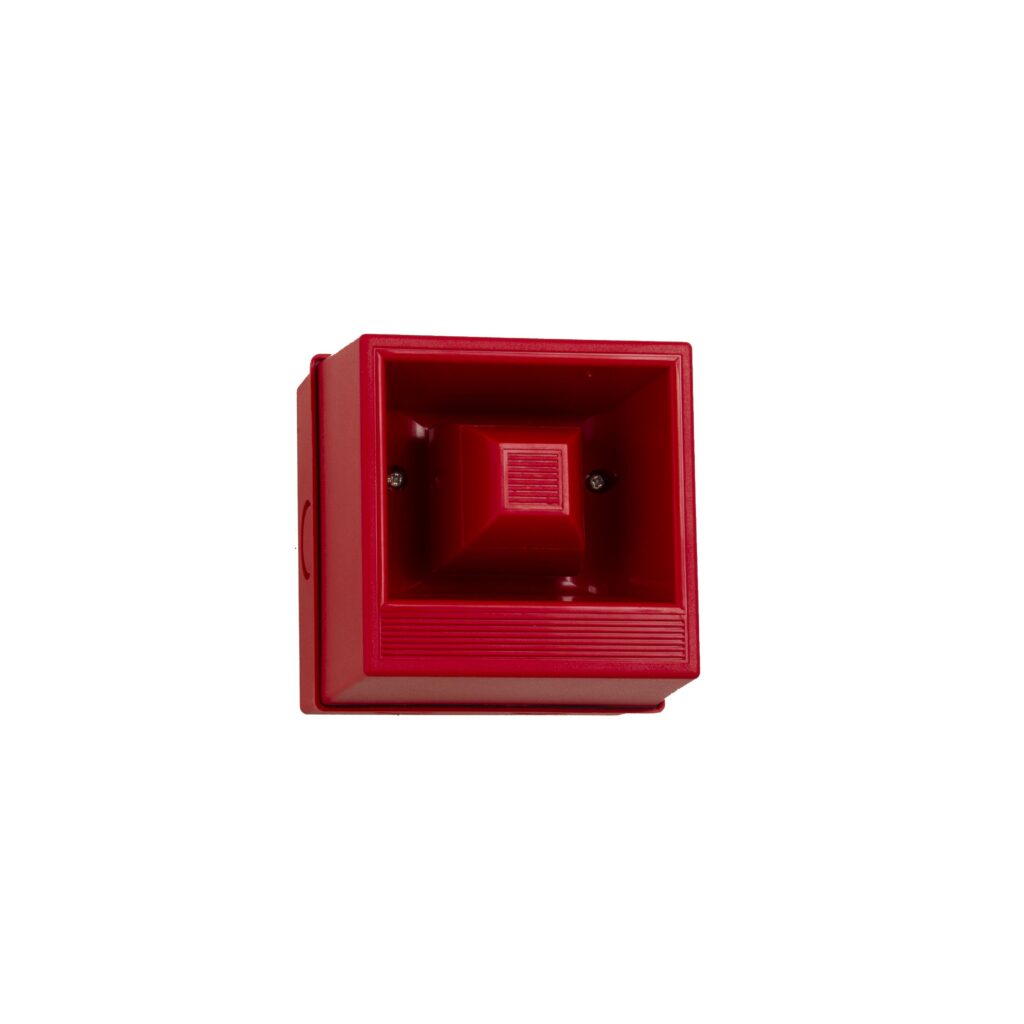
A warning is only useful when people notice it, understand its meaning, and know what action to take. In busy production areas, background machinery noise and competing notifications can make that difficult. The YA40/D Electronic Sounder offers a flexible audible signalling option for engineers designing clear responses to equipment faults, process changes, and emergencies. Rather than treating every alarm as the same event, facilities can use thoughtful tone selection, placement, and control integration to make warnings more meaningful.
What Does the YA40/D Electronic Sounder Offer Beyond a Basic Buzzer?
The YA40/D is a Clifford & Snell YA40-series electronic sounder intended for audible signalling. Common 24 V DC versions provide 32 selectable tones and two-stage alarm operation. A selectable sound pattern allows system designers to distinguish a routine warning from a condition requiring a different response.
Unlike a simple buzzer with one fixed sound, its configurable tones offer flexibility when multiple alerts need to be understood across one workplace.
How Should Teams Interpret Its Acoustic Rating?
The sound output is commonly specified at roughly 106–108 dB(A) at one metre, depending on the particular version and published specification. This is a measurement under defined conditions, not a guarantee of audibility throughout a building. Walls, machinery, distance, and hearing protection all influence what workers actually hear.
Why Does Alarm Tone Selection Matter in Noisy Facilities?
A tone that stands out in a quiet workshop may be difficult to recognise beside compressors or running production lines. Engineers therefore assess the existing sound environment before choosing an alarm pattern. Alternating or pulsed signals may be more recognisable than an unchanging tone in certain settings, but effectiveness depends on the actual background noise.
What Makes a Warning Signal Easier to Understand?
An effective signalling plan should consider:
- Distinctive tones for meaningfully different events.
- Sufficient sound coverage at occupied positions.
- Consistent alarm meanings across related work areas.
- Clear written instructions and employee training.
- Periodic testing under realistic operating conditions.
For applications involving multiple signalling points, comparing suitable Electronic Sounders can help engineers select devices that align with the wider warning strategy.
How Can Two-Stage Operation Support Better Alarm Priorities?
Two-stage signalling allows an installation to present different audible patterns for separate control conditions. For example, an initial stage might indicate that an operator should investigate equipment, while a second stage communicates an escalation defined by the facility’s safety procedures.
The important point is that tones do not automatically communicate urgency. Personnel need training, and any critical alarm logic must be designed with the relevant standards and risk assessment.
Designers should also avoid assigning too many similar tones. A small, documented set of signals is usually easier for workers to remember during stressful situations.
Where Should a YA40/D Sounder Be Mounted for Better Coverage?
The best location is not simply the nearest convenient wall. Sound may be blocked by racking, absorbed by furnishings, or masked by equipment noise. Engineers should assess likely occupied locations, operating patterns, and required sound levels before positioning audible devices.
Can Environmental Protection Reduce Installation Problems?
Many YA40/D configurations feature an IP65-rated, flame-retardant ABS enclosure and stainless-steel fixings. These features support use in suitable industrial surroundings, but installation quality still matters. The correct sealed cable entry, secure mounting surface, and recommended wiring arrangements help preserve enclosure protection.
An IP rating does not mean a device is suitable for every hazardous location or harsh chemical environment. Additional certification may be necessary.
How Do Audible and Visual Alarms Work Together?
Sound alone may be insufficient where staff wear hearing protection, ambient noise is high, or accessible notification is required. Visual signalling provides an additional way to attract attention, especially where warning systems must reach people with differing sensory needs.
Around the later design stage, teams may compare Beacon – Sounder Combinations to determine whether coordinated light and sound would strengthen communication within the installation.
What Should Technicians Check During Commissioning and Maintenance?
Before operation, qualified personnel should confirm supply compatibility, wiring polarity where relevant, tone selection, and the required response to each control signal. The available 24 V DC variants must be matched to the correct circuit and supply requirements.
Useful checks include:
- Activating each intended alarm stage separately.
- Confirming audibility at representative occupied locations.
- Checking enclosure seals and cable entry fittings.
- Ensuring alarms correspond to documented instructions.
- Recording tests and investigating unexpected changes.
Tests should be planned to prevent confusion with genuine emergencies and follow site procedures.
Why Is the YA40/D Electronic Sounder a Practical Choice for Modern Warning Design?
Effective warning systems turn electrical events into clear human instructions. The YA40/D Electronic Sounder provides tone flexibility, two-stage signalling, and robust construction to support that objective when correctly specified. By considering acoustics, human response, mounting conditions, and maintenance from the outset, engineers can create warnings people are more likely to recognise and act upon. Exploring related Sounders & Beacons also helps ensure the selected audible device fits the complete signalling design rather than operating as an isolated component.
